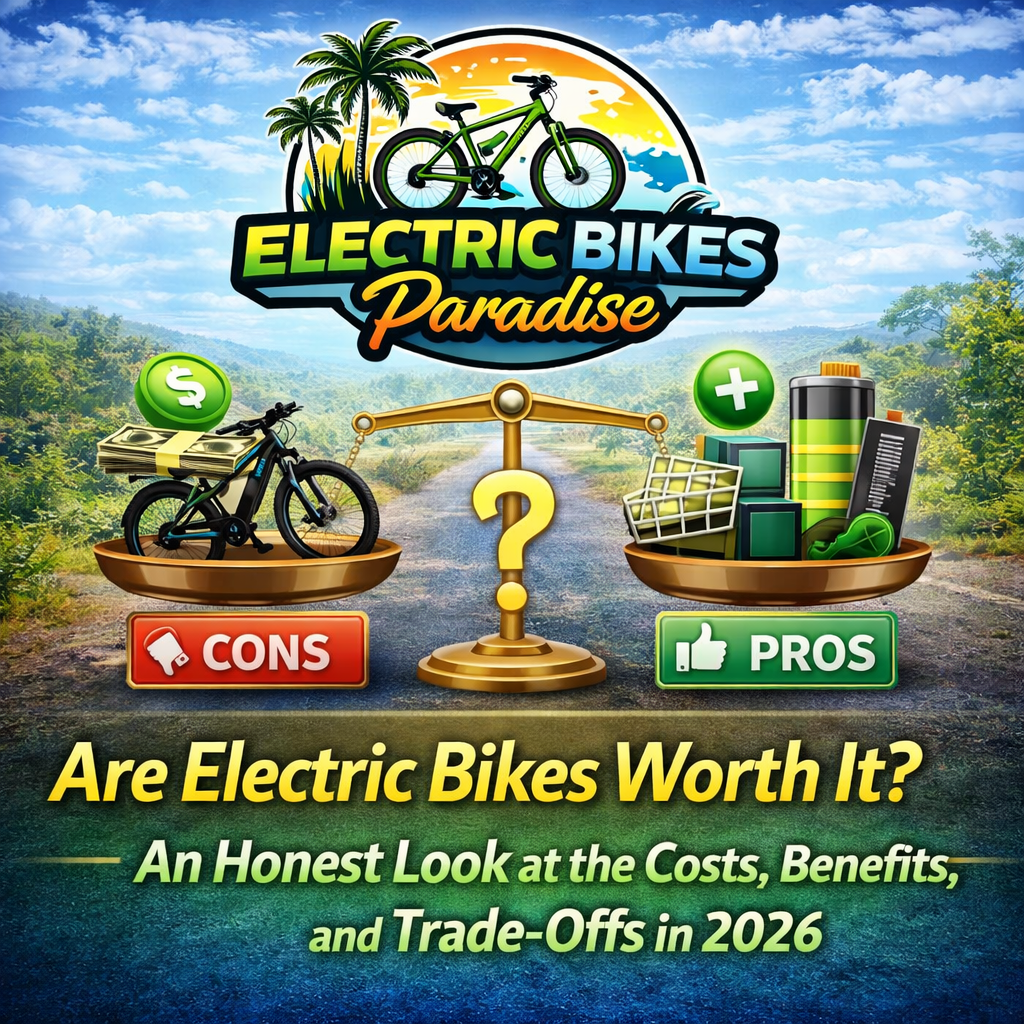
You have seen electric bikes everywhere. On your commute, on the bike path, parked outside the coffee shop. The market has exploded, prices have come down, and the technology keeps getting better. But before you spend $1,000 to $3,000 on a new ebike, you want an honest answer to the question everyone asks: are electric bikes actually worth it?
The short answer is yes, for most people. But “worth it” means different things depending on your situation. An ebike that replaces half your car trips and saves you thousands a year in gas and parking is obviously a great investment. An ebike that sits in your garage after the novelty wears off is a waste of money. The difference comes down to understanding what electric bikes are genuinely good at, where they fall short, and whether your lifestyle lines up with their strengths.
This guide gives you an unbiased breakdown of every benefit, every drawback, and the real-world math behind owning an electric bike in 2026. No hype, no sales pitch, just the information you need to make a smart decision.
Browse our full selection of electric bikes at Electric Bikes Paradise if you decide an ebike is right for you.
The Financial Case: How Much Can an Electric Bike Save You?
Money is usually the first thing people think about, so let’s start with the numbers.
Ebike vs. Car Costs
The average annual cost of owning and operating a car in the United States is over $10,000 when you factor in loan payments, insurance, fuel, maintenance, registration, and depreciation. Even a paid-off car with modest insurance and fuel costs still runs $3,000 to $5,000 per year.
An electric bike costs $1,000 to $2,500 upfront for a quality model, with ongoing costs of $50 to $300 per year (electricity, tires, brake pads, chain, and the occasional tune-up). Battery replacement every 3 to 5 years adds $300 to $800. There is no insurance requirement, no registration, no fuel, and no parking fees.
If you replace even half of your short car trips (under 10 miles) with an ebike, the savings add up quickly. Many riders report saving $2,000 to $5,000 per year by reducing their car usage, which means the bike pays for itself within the first year. Riders who fully replace a car (common in urban areas with good infrastructure) can save $8,000 to $10,000 annually.
Ebike vs. Public Transit
Monthly transit passes typically cost $50 to $150 depending on your city, adding up to $600 to $1,800 per year. An ebike eliminates that expense entirely while offering door-to-door convenience, no waiting for schedules, and no crowded buses or trains. A mid-range ebike from brands like Rattan or Velowave pays for itself within 1 to 2 years of replacing transit costs alone.
Ebike vs. Ride-Sharing
Regular ride-sharing users (Uber, Lyft) can easily spend $200 to $500 per month. That is $2,400 to $6,000 per year, enough to buy a premium electric bike every single year. An ebike is a one-time purchase that lasts 5 to 10 years.
The Cost of Charging
One of the most surprising facts about ebike ownership is how cheap the electricity is. A full charge on a typical 48V 13Ah battery costs roughly 5 to 12 cents. Even if you charge every day, your annual electricity bill for the bike is under $50. That is less than a single tank of gas.
The Health Benefits: Do You Actually Get Exercise?
This is one of the biggest misconceptions about electric bikes. Many people assume that because the motor does some of the work, you are not getting exercise. Research consistently says otherwise.
E-bikes Provide Real Exercise
A 2019 study found that ebike riders achieve heart rates and breathing rates high enough to qualify as moderate aerobic exercise. A 2021 study comparing ebike and traditional bike commuters reached the same conclusion: ebike riding counts as a meaningful workout, especially at lower pedal assist levels.
The key insight is that ebike owners ride more often and for longer distances than traditional cyclists. The motor assistance removes the barriers that keep many people from riding in the first place (steep hills, long distances, arriving sweaty at work), which means riders who would otherwise drive end up cycling instead. More frequent rides add up to more total exercise, even if each individual ride involves less effort than a traditional bike ride.
Adjustable Effort Levels
Most ebikes offer 3 to 5 pedal assist levels. On PAS 1 (lowest assist), you are doing most of the work and getting a solid cardiovascular workout. On PAS 5 (highest assist), the motor handles the heavy lifting and you cruise with minimal effort. This flexibility means you can get a hard workout when you want one and take it easy when you do not.
Many riders use lower assist levels on flat sections and higher assist for hills, which keeps the ride enjoyable without eliminating the exercise benefit. Others use low assist for their morning ride and higher assist on the way home when they are tired.
Accessible Fitness for Everyone
Electric bikes make cycling accessible to people who might otherwise be unable to ride. Older adults, people with joint issues, riders recovering from injuries, and anyone with limited cardiovascular fitness can enjoy cycling thanks to the motor assist. The adjustable power means you can gradually increase your effort level as your fitness improves.
This accessibility is one of the strongest arguments for ebike ownership. A bike that sits in the garage because riding is too difficult provides zero health benefits. An ebike you actually enjoy riding and use regularly provides significant and compounding health benefits over time.
The Environmental Impact
If reducing your carbon footprint matters to you, an electric bike is one of the most effective personal choices you can make.
Electric bikes produce zero direct emissions. The electricity used to charge the battery comes from the grid, and even when accounting for the carbon intensity of electricity generation, an ebike produces a tiny fraction of the emissions of a car. Estimates vary, but ebikes are roughly 10 to 20 times more energy-efficient per mile than an electric car and 50 to 100 times more efficient than a gasoline vehicle.
Beyond carbon emissions, ebikes reduce noise pollution (they are nearly silent), cause minimal road wear compared to cars, and take up far less space for parking and storage. In congested urban areas, every car trip replaced by an ebike reduces traffic for everyone.
The Practical Benefits
Beyond money, health, and the environment, electric bikes offer several practical advantages that make daily life easier.
Faster Commutes (Sometimes)
In urban areas with traffic congestion, an ebike often gets you to your destination faster than a car. You skip traffic, take bike lanes, and avoid searching for parking. Average ebike commuting speeds of 15 to 20 mph are competitive with urban car speeds during rush hour. For trips under 5 to 10 miles, an ebike frequently beats a car door-to-door.
No Sweat Arrivals
One of the top reasons commuters avoid traditional bicycles is arriving at work sweaty and disheveled. An ebike solves this completely. With moderate to high pedal assist, you can ride at a comfortable pace without breaking a sweat, even on warm days and hilly routes. This makes cycling practical for professional commuters who do not have access to a shower at work.
Easy Parking
An electric bike takes up a fraction of the space a car needs. You can park at a bike rack, bring a folding model inside, or store it in a small apartment. No more circling for parking, no more parking fees, and no more parking tickets.
Cargo Capability
Modern electric bikes can carry impressive loads. Rear racks, panniers, and baskets handle groceries, work bags, and everyday cargo with ease. Dedicated cargo ebikes can haul 200 to 400+ pounds, including children, pets, and large deliveries. The motor assist makes carrying heavy loads practical in a way that would be exhausting on a traditional bicycle.
Fun Factor
This might sound trivial, but it matters more than most people expect. Electric bikes are genuinely fun to ride. The motor assistance makes every ride feel effortless and enjoyable, which motivates riders to ride more often. Many ebike owners report that riding their bike is the highlight of their day. That kind of enjoyment leads to consistent use, which is ultimately what determines whether the bike is “worth it.”
The Honest Drawbacks
No product is perfect, and electric bikes have real trade-offs you should understand before buying.
Higher Upfront Cost
A quality electric bike costs $1,000 to $2,500, significantly more than a traditional bicycle. While the long-term savings often justify the price, the initial investment is a real barrier for some buyers. Financing options can help spread the cost, but you are still spending more upfront than you would on a regular bike.
Weight
Electric bikes are heavy. Most models weigh between 45 and 75 pounds due to the motor and battery. This makes them harder to carry up stairs, lift onto a car rack, or maneuver in tight spaces. Folding models help with storage but are still heavier than traditional folding bikes. If you live in a walk-up apartment or need to carry your bike regularly, weight is a real consideration. Brands like Dahon and Qualisports offer lighter folding options.
Battery Range Limitations
Most ebikes offer 25 to 60 miles of range per charge, which covers the vast majority of daily riding needs. However, if you need to ride longer distances without access to charging, range anxiety is real. Cold weather, hills, headwinds, and high assist levels all reduce range. Planning longer rides requires awareness of your battery level and terrain.
Theft Risk
Electric bikes are attractive targets for thieves due to their value. A quality lock is essential, and even then, theft is a concern in some urban areas. Removing the battery when parking in public adds security (since the battery is the most expensive component) but adds inconvenience. Some riders invest in GPS trackers and insurance for additional peace of mind.
Maintenance Complexity
While ebike maintenance is simpler than a car, it is more complex than a traditional bicycle. The electrical components (battery, motor, controller, display, wiring) add systems that can potentially fail, and repairs may require specialized knowledge. Choosing a reputable brand with good customer support and a clear warranty policy helps mitigate this risk.
Weather Dependency
Rain, snow, and extreme temperatures affect ebike usability. Most ebikes handle light to moderate rain, but they are not designed for heavy downpours or submersion. Cold weather reduces battery performance and range. Very hot weather can also affect battery life over time. If you live in a climate with harsh winters, your ebike may see limited use during several months of the year.
Who Should Buy an Electric Bike?
Based on everything above, here are the scenarios where an electric bike delivers the most value.
Commuters with trips under 15 miles each way. This is the sweet spot for ebike commuting. The bike saves money, time, and stress while providing exercise and fresh air.
Riders who want to cycle but find traditional bikes too difficult. Hills, distance, joint pain, limited fitness, or simply not wanting to arrive sweaty. The motor assist removes every one of these barriers.
People looking to reduce car usage. Even partial car replacement (running errands, short trips, weekend rides) adds up to significant savings and environmental benefit.
Outdoor enthusiasts and recreational riders. Fat tire models from brands like Eunorau and Nakto open up trails, beaches, and terrain that would be exhausting on a traditional bike.
Older adults who want to stay active. The adjustable assist makes cycling accessible regardless of fitness level, and electric trikes provide additional stability.
Families and cargo haulers. Electric cargo bikes can replace a car for school runs, grocery trips, and local errands.
Who Might Want to Skip an Electric Bike?
If you rarely leave your house or live in an area where cycling is impractical (no bike infrastructure, extreme weather year-round, very long commute distances), an ebike may not get enough use to justify the cost.
If you are a dedicated road cyclist who rides specifically for maximum physical challenge, a traditional bike delivers a harder workout per mile. (Though many serious cyclists also own an ebike for commuting and recovery rides.)
If your budget is extremely tight and you cannot afford $1,000+ without financial strain, a traditional bicycle may be the smarter choice. A regular bike still provides transportation and exercise at a fraction of the cost.
Frequently Asked Questions
Are electric bikes worth the money?
For most riders, yes. The combination of transportation savings, health benefits, environmental impact, and pure enjoyment makes an ebike one of the best investments in personal mobility. The key is choosing a bike that matches your actual riding needs and using it regularly.
How long does an electric bike last?
A quality ebike lasts 5 to 10 years with proper maintenance. The battery typically needs replacement after 3 to 5 years (500 to 1,000 charge cycles), while the motor, frame, and mechanical components last much longer.
Do electric bikes save money compared to cars?
Yes, significantly. An ebike costs $1,000 to $2,500 upfront with under $300 per year in ongoing costs. A car costs $5,000 to $10,000+ per year. Riders who replace regular car trips with an ebike typically save $2,000 to $5,000 annually.
Are electric bikes good for older adults?
Excellent. The adjustable motor assist makes cycling accessible regardless of fitness level. Step-through frames eliminate the need to swing a leg over the bike, and electric trikes provide three-wheel stability. Many riders in their 60s, 70s, and beyond use ebikes daily.
Do you get exercise on an electric bike?
Yes. Research confirms that ebike riding provides moderate aerobic exercise, especially at lower assist levels. Ebike owners also ride more frequently and for longer distances than traditional cyclists, resulting in more total exercise over time.
Can an electric bike replace a car?
For short to medium-distance trips (under 15 miles), many riders fully replace their car with an ebike. Even partial replacement (some errands and commutes) delivers meaningful savings. Cargo ebikes can also handle grocery runs, school pickups, and light deliveries.
Are cheap electric bikes worth it?
Bikes under $800 often compromise on safety-critical components like brakes, battery quality, and frame integrity. A mid-range bike ($1,000 to $2,000) delivers dramatically better value and lasts significantly longer. If budget is tight, consider financing to get a better bike at manageable monthly payments.
What are the biggest downsides of electric bikes?
The main drawbacks are higher upfront cost compared to traditional bikes, heavier weight (45 to 75 pounds), battery range limitations, theft risk, and weather dependency. For most riders, the benefits far outweigh these trade-offs.
Is now a good time to buy an electric bike?
2026 is an excellent time to buy. Battery technology has improved, prices have come down at every tier, component quality has increased across the board, and the used market provides additional options. Government incentive programs in some states further reduce the cost.
Where should I buy an electric bike?
Look for a retailer with clear product information, responsive customer support, a solid warranty, and transparent return policies. At Electric Bikes Paradise, we back every purchase with free shipping, a warranty policy, a returns policy, financing options, and a low price guarantee. Check our customer reviews to hear from riders who have already made the switch.
Ready to Find Out for Yourself?
The best way to know if an electric bike is worth it is to ride one. Browse our collection by brand to find the right model for your needs, budget, and riding style.
Shop Electric Bikes by Brand
- Ancheer
- Dahon
- DWMEIGI
- Eunorau
- G-Force
- GlareWheel
- GoPowerBike
- Micargi
- Nakto
- Qualisports
- Rambo
- Rattan
- Vanpowers
- Velowave
- Voltaic
- View All Brands
Shop by Category
Why Shop With Us?
At Electric Bikes Paradise, we are a U.S.-based electric mobility store committed to helping you find the right ride. Every order includes free shipping, secure checkout, and real customer support from people who actually know electric bikes. We also offer a low price guarantee, financing options, and regular coupons and discounts to make your purchase even easier.
Have Questions? We’re Here to Help.
- Phone: +1 (307) 429-0021 (Mon-Fri, 9am-5pm MST)
- Contact Page: electricbikesparadise.com/contact
- FAQ: electricbikesparadise.com/faq
- Customer Reviews: electricbikesparadise.com/reviews
Start shopping today and discover why thousands of riders have made the switch. Browse All Electric Bikes Now.