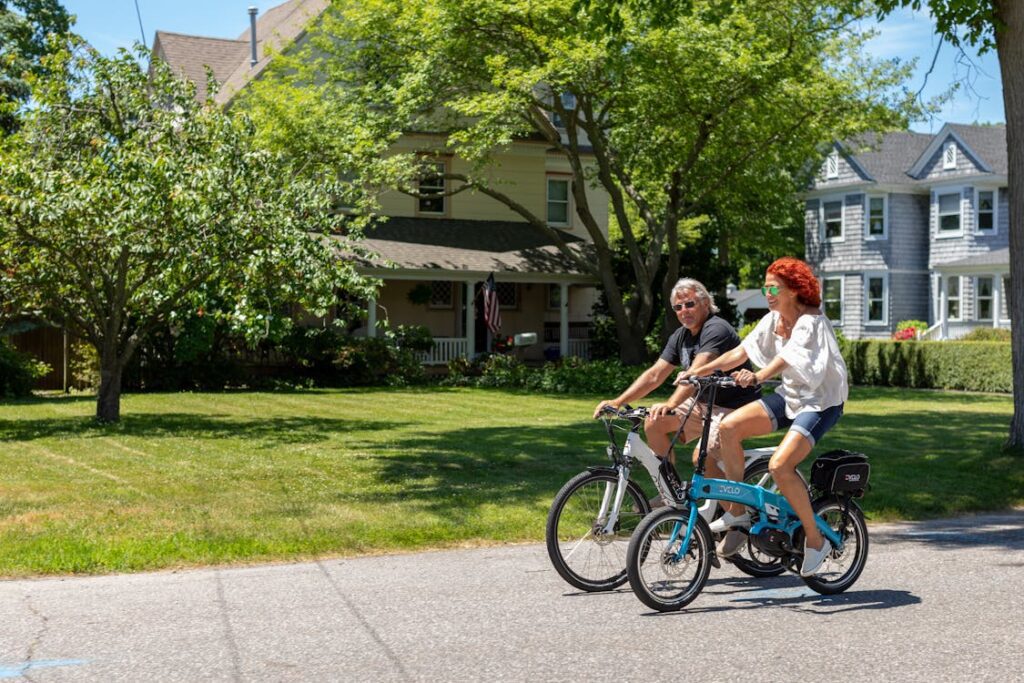
Summer is the perfect time to ride. The weather is warm, the days are long, and you’ve actually got a reason to get outside. An electric bike designed with summer riding in mind can absolutely transform your warm-weather lifestyle, whether you’re cruising to the beach, commuting in the heat, or just exploring your neighborhood without arriving at your destination covered in sweat.
The question is: what kind of e-bike actually works best for summer riding? A heavy mountain bike is going to feel sluggish on hot days. A skinny road bike is going to get destroyed on rough pavement. You want something that’s versatile, reliable, and actually fun to ride when it’s hot outside. Let me walk you through the best summer electric bikes and what makes them work for the season.
Summer Riding Challenges and What to Look For
Summer brings specific challenges to electric bike riding. Heat affects battery performance. Batteries lose efficiency in high temperatures, sometimes losing 20 to 30 percent of their range on really hot days. You might need to charge more frequently or plan your routes differently.
You’re also riding longer distances in summer because the weather lets you. A bike that’s great for a 15-mile commute might feel cramped on a 30-mile recreational ride. Summer riding means you need more comfort, better range, and probably a bit more power than you’d use in other seasons.
Puncture risk increases in summer. Hot pavement is softer, there’s more debris on roads, and rougher surfaces expose puncture risks. You want a bike with robust tires and good puncture protection if you’re planning to ride regularly.
Visibility changes in summer. Long days mean you might be riding in bright sunlight or glare, so visibility to cars becomes really important. You want a bike that’s easy to see and that has good lighting if you ride early morning or evening.
Comfort is paramount in summer. You’re spending more time in the saddle, you’re dealing with heat and sweat, and you want a bike that feels good after two hours of riding, not just twenty minutes. Saddle comfort, handlebar positioning, and overall ride quality matter more in summer than any other season.
Commuter Electric Bikes for Summer
If you’re using your e-bike to commute during summer months, a purpose-built commuter bike is probably your best bet. These bikes are designed specifically for regular transportation: getting to work, running errands, dealing with real-world conditions.
Commuter e-bikes typically have medium-power motors around 500W to 750W. That’s enough to help with acceleration and hills without being overkill for city commuting. They have batteries in the 400Wh to 625Wh range, which gives you 20 to 40 miles of range depending on how much assistance you’re using.
Weight distribution on commuter bikes is designed for efficiency and comfort over distance. The riding position is more upright than racing bikes, which is way more comfortable for longer rides and for stopping and starting in traffic. You’re not racing; you’re getting places reliably and efficiently.
Integrated lights are a huge advantage on commuter bikes. You might leave work at dusk and be home after dark. Having built-in front and rear lights means you’re visible without having to remember to add lights separately. The same goes for fenders. Summer rain happens, and a full-coverage fender system keeps road spray off you and off the bike.
Cargo capacity on a commuter bike matters too. A rear rack lets you carry a backpack, a messenger bag, groceries, or work supplies without it being a pain in the butt. Some commuter bikes also have frame-integrated storage or basket options.
The Velowave Pogo is a really solid summer commuter option. It’s got a 750W motor, 52V battery with about 40 miles of real range, integrated lights, fenders, and a comfortable upright riding position. At around $2,299, it’s a solid investment that will serve you well for years. You can walk into the Electric Bikes Paradise store, test ride it, and get it set up perfectly for your commute.
Beach Cruiser Electric Bikes
If you’re more interested in recreational summer riding, a beach cruiser style e-bike might be exactly what you want. These bikes are designed for fun, comfort, and casual rides. They’re not fast; they’re not focused on efficiency. They’re about enjoying the ride.
Beach cruiser e-bikes have really comfortable, wide saddles. The handlebars are positioned for an upright, relaxed riding position. The tires are wider, usually 2.0 to 2.5 inches, which float over bumps and feel forgiving on rough pavement. The overall bike feels mellow and comfortable.
Motors on beach cruisers are often mid-drive rather than hub-drive, which gives them a more natural pedaling feel. The weight distribution is balanced front to back, making the bike feel stable and easy to control even at slow speeds.
Colors and styling on beach cruiser e-bikes tend toward bright, fun aesthetics. You’ve got reds, teals, creams, and pastels instead of the typical matte black of a lot of e-bikes. These bikes are designed to look good sitting on your porch or outside a coffee shop.
Range on a beach cruiser is typically 20 to 35 miles, which is plenty for day trips to the beach or exploring your local area. Top speed is usually 20 to 25 mph, which is actually plenty fast for safety in urban environments and really fun for recreational riding.
Battery management on beach cruisers is usually straightforward. The battery is mounted on the frame in a way that doesn’t look overly technical, and the charge time is typically 6 to 8 hours. You charge it overnight and you’re ready to go.
Fat Tire Electric Bikes for Summer
Fat bikes have become really popular for summer riding, especially if you’re riding on beaches, in sand, or on other non-traditional surfaces. The massive tires, usually 3.8 to 5 inches wide, float over surfaces that would bogged down a regular bike.
The advantage of fat tires in summer is traction and comfort. Those huge tires can run at lower pressure, which gives you a cushy ride that’s almost like suspension. They grip on sand, gravel, and loose surfaces. They handle potholes and rough pavement way better than thin tires.
The downside is weight and rolling resistance. Fat bikes are heavy, usually 60 to 80 pounds with the electric motor and battery. That weight affects how the bike handles and how much energy you need to move it. On smooth pavement, that weight is a disadvantage. On rough terrain, it’s actually helpful because it gives you more momentum.
Motor power on fat bikes is often 750W to 1000W because the bikes are heavier and often ridden on rougher terrain where you need more power. Battery size tends to be larger too, often 52V with 600+ Wh capacity, giving you 30 to 40 miles of real range.
The Eunorau AllTerrain is a solid fat bike option. It’s got a 750W motor, 52V battery, full suspension, and tires that can handle pretty much any terrain. At around $2,200 to $2,400, it’s a reasonable investment for someone who wants to ride on varied terrain and isn’t concerned about weight or speed.
Mountain Bike Electric Bikes for Summer Adventures
If you’re into actual trail riding and summer adventures, a mountain bike e-bike lets you go places and tackle terrain that would be really difficult or impossible on a traditional mountain bike. The electric assist makes climbing and long rides more accessible.
Electric mountain bikes come in two categories: full suspension and hardtail. Full suspension has shock absorbers on both the front and rear wheels, giving you a smooth ride over rough terrain. Hardtail has suspension only on the front. Full suspension is more comfortable and faster on really rough terrain. Hardtail is lighter and more efficient on smoother trails.
Motor power on mountain bikes is typically 750W to 1000W because trails have elevation changes and technical features that demand power. The motor placement is usually mid-drive, which puts power directly on the pedals and gives you better traction on climbs and better technical control on descents.
Batteries on e-mountain bikes are often larger, 500Wh to 750Wh, because climbing takes a lot of energy. Real range is typically 20 to 40 miles depending on how technical the terrain is. Aggressive climbing and technical riding drain the battery faster than smooth riding.
Tires on mountain bikes are knobby and aggressive, designed for grip and control on loose terrain. Width is typically 2.0 to 2.5 inches, smaller than fat bike tires but still substantial compared to road bike tires.
The Rattan Peppermint is a good entry-level e-mountain bike option. It’s a hardtail with mid-drive motor, good components, and a reasonable price around $1,600 to $2,000. It’s capable enough for recreational trail riding but not so expensive that you’ll stress about crashing it.
Range Considerations for Summer Heat
Here’s something that trips people up: stated range and real range are really really different in hot summer conditions. A bike rated for 40 miles might actually give you 28 to 32 miles in 95-degree weather.
The issue is physics. Batteries are less efficient at temperature extremes. Hotter temperatures reduce efficiency by 20 to 30 percent. If you’re riding in hot weather and your route is close to your battery’s maximum range, you might not make it home.
For summer riding, think about your typical longest ride and then add 20 to 30 percent to that distance for battery capacity. If your longest summer ride is 25 miles, look for a bike with 30 to 35 miles of rated range to give yourself a safety buffer. If your longest ride is 40 miles, look for 50+ miles of range.
Also consider charging infrastructure. Where can you charge? If you can charge at work, at a friend’s house, or at a coffee shop, you can potentially break longer rides into segments. If you’re stuck with whatever range gets you home, you need more capacity.
Water Resistance and Summer Weather
Summer brings storms, rain, and water exposure. Modern e-bikes are designed to handle water, but not all are created equal. Look for bikes with IP rating specifications that indicate water resistance.
IP65 rating is the typical standard for decent water resistance. IP65 means the bike can handle rain and water spray but shouldn’t be submerged or power-washed directly. That’s appropriate for normal summer riding and occasional rain.
Check where the electrical connections are on your bike. Connectors that are exposed are vulnerable to water intrusion. Connectors that are protected or sealed are safer. The battery connection point and the motor connection point are the most important areas to look at.
Waterproof cases for your battery and controller add extra protection if you’re riding in heavy rain or wet conditions regularly. These aren’t necessary for occasional rain, but if you’re commuting through a rainy summer, they’re a good investment at $30 to $100.
Maintenance Tips for Summer Riding
Summer riding is hard on bikes. Dust, heat, salt spray if you’re near the ocean, and general wear and tear all take their toll. But regular maintenance keeps your bike running smoothly. For detailed maintenance guides and bike care tutorials, check out Park Tool’s bike maintenance guides and community bike maintenance videos.
Clean your bike regularly, especially if you’re riding on dusty roads or near the ocean. Dried salt and dust accelerate corrosion. A simple rinse with fresh water and a gentle scrub with a soft brush keeps your bike healthy. Avoid power washing directly at electrical components.
Check your brakes regularly. Summer heat can affect brake fluid and brake performance. Make sure your brakes are responsive and stopping power is consistent. If you notice any changes in braking feel, have them serviced.
Lubricate your chain regularly. The chain gets dirty in summer and needs regular cleaning and lubrication to prevent rust and wear. A clean, well-lubricated chain is a happy chain.
Check tire pressure every week or two. Heat expands air in your tires, and over-inflated tires are more prone to punctures. Also, under-inflated tires heat up more in summer conditions. Keep pressure at the manufacturer-recommended level, maybe slightly lower if you’re on rough terrain.
Watch your battery. If it’s getting really hot, that’s a sign something might be wrong. Modern e-bikes have temperature management systems, but if your battery is running hotter than normal, have it checked. Store your bike in shade when not in use; leaving it in direct sun all day accelerates battery degradation.
Electric Bikes Versus Manual Bikes for Summer
Here’s the honest truth: summer is the season where the advantages of an electric bike really shine. You can take longer rides without exhaustion. You can ride in heat without arriving somewhere looking like you just finished a workout. You can explore more of your area because you’re not limited by your physical stamina.
If you’re thinking about buying your first e-bike, summer is perfect timing. You’ve got months of good riding weather ahead. You can actually use it regularly and get your money’s worth.
Compare a summer on a manual bike versus a summer on an e-bike. Manual bike: you ride 10 to 15 miles, you’re tired, you’re sweaty, you’re limited by your fitness. E-bike: you ride 30 to 40 miles, you’re not exhausted, you’re not soaked in sweat, and you’ve actually explored your area.
The e-bike doesn’t replace fitness. It lets you do more with the fitness you have. And honestly, that’s a really really valuable thing in summer when comfort and range matter.
Budget Ranges for Summer Bikes
Quality summer e-bikes start around $1,200 for basic models and go up to $4,000 or more for premium options. Let me break down what you get at different price points.
In the $1,200 to $1,500 range, you’re getting a functional basic commuter or cruiser. Range is modest, components are solid but not premium, and build quality is acceptable. These bikes work fine for regular riding but might have some rough edges.
In the $1,500 to $2,500 range, you’re in the sweet spot. You’re getting better motors, larger batteries, better components, and better overall quality. These bikes will handle summer riding reliably and feel good to ride. Most of our recommendations fall in this range.
In the $2,500 to $4,000 range, you’re getting premium bikes with excellent build quality, powerful motors, large batteries, and premium components. These bikes are a joy to ride and will last for years with normal maintenance.
Above $4,000, you’re getting specialized bikes for specific purposes: high-performance mountain bikes, long-range cargo bikes, or bikes with advanced technology and features.
Our Summer Recommendations from the Store
For summer commuting, the Velowave lineup offers excellent value. The Pogo is great for urban commuting. The Vigor is perfect if you want something lighter and quicker for shorter distances. Both are around $2,000 to $2,300 and are genuinely great bikes. Browse our commuter e-bikes collection to compare all options.
For recreational summer riding, Eunorau bikes punch above their weight. The AllTerrain is amazing for off-road exploration. The Fat Tire models are perfect for beach and sand riding. You’re looking at $1,800 to $2,400. Check our mountain e-bikes and fat tire e-bikes selections.
For something versatile that does everything well, Rattan bikes offer good value. The Shine is a great all-arounder for commuting and recreation. The Peppermint is awesome if you want to hit some trails. Prices are $1,600 to $2,500. Explore our e-bikes under $2000 for value options.
All of these bikes are in stock at Electric Bikes Paradise. You can walk in, test ride them, talk to people who actually know the bikes, and get set up with confidence. That local support is really really valuable when summer rolls around and you want everything working perfectly.
Getting Your Bike Ready for Summer
If you already have an e-bike and you’re thinking about ramping up your summer riding, do a pre-season checkup. Have your bike serviced: clean the drivetrain, check the brakes, inspect the tires, and make sure the battery is holding a good charge.
Upgrade your comfort if needed. Get a better saddle if yours isn’t comfortable for longer rides. Add bar grips that are more comfortable for extended holding. Adjust your riding position so you’re not straining your back or wrists.
Invest in good lights if you don’t have them. Riding in early morning or evening happens in summer, and visibility matters. A good front light and rear light make a huge difference in being seen by cars.
Consider adding fenders if your bike doesn’t have them. Summer rain is common in many areas, and fenders keep road spray off you and off your drivetrain. They’re ugly, but they’re really really practical.
Planning Summer Rides
One of the great things about summer is long-distance riding becomes possible. A 30-mile ride is doable in a day. A 50-mile ride with overnight stops is genuinely feasible.
Plan routes that include charging opportunities if you’re doing longer rides. Where can you charge your bike? Coffee shops with outlets? Restaurants? Friend’s houses? Knowing your charging options lets you plan more ambitious routes.
Also think about terrain. Summer is good terrain to explore new places. Plan rides that include interesting destinations: coffee shops, parks, scenic overlooks, beaches. Don’t just bike around your neighborhood; actually go somewhere.
Safety in Summer Heat
Heat is real. Riding in 95-degree heat is exhausting even on an e-bike where you’re not pedaling hard. You need to hydrate way more than you’d think. A 20-mile ride that takes 45 minutes to an hour means you need serious hydration.
Get a good water bottle holder or a backpack with a hydration bladder. Drink water before you’re thirsty. Take breaks in shade. If you’re feeling dizzy or nauseous, stop and cool down. Heat exhaustion is real and it’s dangerous.
Wear sunscreen. Your commute isn’t long enough to cause sunburn, right? Wrong. Multiple 10-mile rides over a summer add up to a lot of sun exposure. You want sunscreen with high SPF, and you want to reapply it regularly.
Wear light-colored clothing. Dark clothing absorbs heat; light clothing reflects it. Summer e-bike riding is way more comfortable in light colors. You’ll be less exhausted and less uncomfortable.
Comparing Summer Bikes to Other Seasons
Summer riding is different from commuting in fall and winter. You need different features, different batteries, and different maintenance routines. A bike that’s perfect for summer might not be ideal for winter commuting.
If you’re looking for a year-round bike, you want something versatile. But if you’re specifically buying for summer, optimize for heat, range, and comfort. That’s really different from a winter bike optimization.
Understanding Electric Bike Technology for Summer
If you want to understand how these bikes actually work, check out our detailed guide on how electric bikes work. Understanding motor types, battery technology, and drive systems helps you make better decisions.
Our comprehensive buying guide walks you through evaluation criteria that are specifically relevant to choosing a summer bike.
Comparing Costs and Value
Is a summer e-bike worth the investment? Check out our honest analysis of whether e-bikes are worth it. We talk about real costs, real benefits, and what to expect from a multi-year ownership perspective.
The short version: if you’re going to ride more than 1,000 miles per year, an e-bike is basically always worth it versus other transportation options. If you’re going to ride 500 to 1,000 miles, it depends on your situation. If you’re going to ride less than 500 miles, it might not be justified financially, though the quality of life improvement still might be worth it.
Exploring More Options
We have a comprehensive guide to the best electric bikes that covers tons of options across different styles and price points. If you’re thinking about a summer bike, that’s a good place to explore beyond just what I’m recommending here.
Visit our homepage to see all the content and resources we have available. Explore our beach cruiser e-bikes for summer fun and our off-road e-bikes for adventure. We cover e-bikes, scooters, longboards, wheelchairs, and mobility scooters. If you’re thinking about electric mobility as a lifestyle change, there’s a lot of great information there.
Final Thoughts on Summer Electric Biking
Summer is the perfect season to discover how much an electric bike can improve your life. You’ve got good weather, you’ve got long days, you’ve got the opportunity to actually use the bike regularly and get real value.
Pick a bike that fits your specific summer riding style. If you’re commuting, get a commuter bike. If you’re cruising for fun, get a cruiser. If you want to explore trails, get a mountain bike. If you want versatility, get something that does everything reasonably well.
Then actually ride it. Don’t let it sit in the garage. Use summer to develop a real relationship with your bike, to explore your area, to push yourself a little, and to genuinely enjoy the ride.
A summer on an electric bike is a summer where you do more, explore more, and enjoy your community more. It’s a really really good way to spend the season. For more information on bike safety, maintenance, and summer riding tips, check out bicycle safety resources, NHTSA bike safety guidelines, and bicycle law resources. Come visit us at Electric Bikes Paradise, test ride some bikes, and let’s find the perfect summer bike for you.