Portable mobility scooters are genuinely life-changing for people who have trouble walking long distances, whether due to age, injury, disability, or chronic health conditions. The difference between a portable scooter and a full-size mobility scooter is the difference between something you can actually take with you and something that’s basically permanent furniture. If you need mobility assistance but also want freedom, flexibility, and portability, a lightweight travel-friendly scooter might be exactly what you need.
The tricky part is that portable scooters come with a lot of trade-offs. You’re giving up some comfort, speed, and range to get something that’s light enough to carry or fit in a car trunk. Understanding those trade-offs, and knowing what features really matter for your lifestyle, is the key to picking the right scooter. Let me walk you through what you need to know.
What Is a Portable Mobility Scooter?
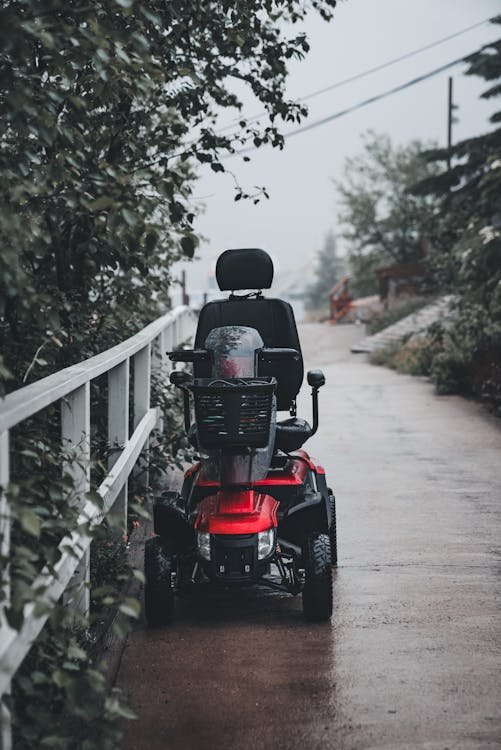
A portable mobility scooter is a motorized vehicle designed for short-distance travel, usually in urban environments or for use while traveling. They’re typically 3 to 5 feet long, weigh 30 to 80 pounds, and can fold or disassemble into manageable pieces.
The most common design is a three-wheeled or four-wheeled platform with a seat, handlebars, a small electric motor, and a rechargeable battery. You sit on the seat, grip the handlebars, and use a throttle or button to control speed. Most travel scooters have top speeds of 5 to 8 miles per hour and ranges of 10 to 20 miles per charge.
The key word is portability. The scooter needs to be light enough that either the user or a caregiver can transport it. That might mean it folds up to fit in a car trunk, or it might mean it disassembles into pieces that can be carried separately. Weight is the critical factor. A scooter heavier than 70 pounds starts becoming a pain in the butt to move around regularly.
Weight Classifications and What They Mean
Portable mobility scooters fall into a few weight categories, and each has implications for how easy they are to transport and use.
Ultra-light scooters weigh 30 to 45 pounds. These are easy to lift, fit in almost any car, and travel easily. The trade-off is limited range, lower weight capacity, and less comfortable seating. They’re great for short trips and people who are strong enough to lift and manage the scooter themselves.
Light scooters weigh 45 to 65 pounds. This is the sweet spot for many people. They’re still manageable to lift and carry, they fit in most cars, and they offer better comfort and range than ultra-light models. A healthy adult can typically lift and manage scooters in this weight range without too much difficulty.
Medium-weight scooters weigh 65 to 80 pounds. These offer even more comfort and capability, but lifting and carrying them is genuinely challenging for most people. You really need either to be quite strong or to have a powered lift system in your vehicle. The benefit is significantly better range, weight capacity, and riding comfort.
Anything heavier than 80 pounds stops being truly portable in the travel sense. Those are more for permanent or semi-permanent use.
Foldable Versus Disassembly Designs
There are two primary design approaches for making scooters portable. Some fold like a baby stroller, collapsing down to a smaller footprint. Others disassemble into separate pieces that stack together.
Folding scooters are convenient because you’re folding the entire unit into one compact shape. You don’t have to separate components or worry about losing pieces. The downside is that folding designs often sacrifice some structural rigidity, and the folding mechanism itself adds weight and complexity.
Disassembly designs break the scooter into pieces: maybe a seat and column assembly, a motor base, wheels that detach, and a battery that unplugs. This approach lets you make each piece lighter and more maneuverable. The downside is that you have multiple pieces to keep track of and to reassemble.
For travel, I’d say folding is generally easier if you’re the one using the scooter. You just fold it, stash it, and you’re done. For people who are helping a user with a scooter, disassembly might actually be easier because each piece is lighter and more manageable.
Battery Technology and Range Expectations
Portable scooters use lithium-ion or lead-acid batteries. Lithium is lighter, longer-lasting, and more expensive. Lead-acid is heavier, needs more maintenance, and is cheaper. For a portable scooter, lithium is absolutely worth the extra cost because every pound matters.
Battery capacity determines range. A small 24V battery might give you 8 to 10 miles. A larger 36V or 48V battery might give you 15 to 25 miles. Here’s the realistic expectation though: just like with e-bikes, the advertised range is usually optimistic.
A scooter rated for 20 miles of range will probably give you 12 to 18 miles in real-world conditions, depending on your weight, the terrain, and how much you use the throttle. If you’re a heavier person, subtract another 20 to 30 percent. If you’re on hilly terrain, subtract another 20 to 40 percent. So a 20-mile scooter might realistically give you 10 to 15 miles.
That’s not a problem if you understand it going in. Most people use portable scooters for short trips anyway: getting around an airport, cruising through a shopping mall, exploring a town on vacation. Very few people are trying to go 20 miles on a scooter.
Weight Capacity and User Size
Most portable scooters have weight capacity limits of 220 to 265 pounds. Some heavier-duty models go up to 300 pounds. It’s really important to choose a scooter rated for your weight because exceeding the weight limit affects performance, lifespan, and safety.
If you’re at the upper end of a scooter’s weight capacity, you should expect reduced range and slightly slower performance. The motor is working harder, and the battery is draining faster. That’s physics, and there’s no way around it.
If you’re above the maximum weight capacity for a given scooter, don’t use it. The risk of mechanical failure increases, and you’re potentially putting yourself in an unsafe situation. Choose a scooter with a weight capacity above your current weight plus maybe 20 pounds as a buffer.
Speed and Performance
Most portable mobility scooters have top speeds of 4 to 8 miles per hour. That might sound slow, but it’s actually plenty fast for the intended use cases. You’re not trying to keep up with traffic. You’re trying to move efficiently without getting tired.
Acceleration is typically smooth and gradual. You squeeze the throttle or press a button, and the scooter speeds up. There’s no jerky motion; it’s designed to be smooth and safe.
Climbing ability is important if you’re in a hilly area. Most portable scooters can handle gentle slopes, but steep hills might be a problem. Check the specifications for maximum grade or incline that the scooter can handle. If you live in San Francisco or another very hilly city, this becomes a critical factor.
Airline Approval and Travel Considerations
If you’re a frequent traveler, you probably want a scooter that’s airline-approved for cabin use. This is a really really important feature because it means you can take your scooter with you on the plane rather than having to check it as luggage or have it transported separately.
Airline-approved scooters typically need to be under 45 pounds, have a battery that’s specially certified (usually the battery must be removed for flight), and have specific dimensions that fit in overhead bins or under seats. Airlines have different policies, but common carriers like Delta, United, Southwest, and American Airlines have specific approval lists for scooters.
If you’re planning to travel with a scooter, check the specific airline’s rules before buying. Some scooters are pre-approved; others might need special paperwork. Some airlines require the battery to be removed, which is easy if it’s a lithium battery with a quick-disconnect, but can be more complicated with integrated batteries.
If you’re traveling internationally, research the rules for your destination country. Some countries have strict regulations about electric vehicles, and what’s approved for US airlines might not be approved for international travel.
Terrain Capability
Portable mobility scooters are designed primarily for smooth, paved surfaces. Concrete, asphalt, and smooth tile are ideal. These surfaces let the scooter operate efficiently and smoothly.
Unpaved terrain like gravel or dirt is doable but less comfortable. You’ll experience more vibration and the scooter will be slower. Your range will also decrease because the motor is working harder.
Soft surfaces like grass, sand, or mud can be really difficult or impossible depending on the scooter. If you need to handle varied terrain regularly, you need a scooter specifically designed for off-road or all-terrain use, which typically means heavier and less portable.
Obstacles like curbs, steps, and significant elevation changes can be problematic. Some portable scooters can climb curbs if they’re not too high, maybe 2 to 4 inches. Anything higher requires a ramp. Most people who use portable scooters regularly learn to route their travels to avoid difficult terrain.
Control Mechanisms and Ease of Use
There are different ways to control a portable scooter’s speed and direction. The most common is a twist-grip throttle, similar to a motorcycle, where you twist the handlebar to control speed. Another option is a pushbutton throttle where pressing a button increases speed. Some scooters use a joystick control for both speed and direction.
For people with limited hand strength or dexterity, pushbutton or joystick controls might be easier than a twist-grip. For people with limited vision, having tactile feedback from a twist-grip can be helpful.
The best control system is the one that feels natural and easy for the specific user. If possible, test different control types before buying to see what works best for you.
Steering is usually done by leaning or by slight handlebar movements depending on the design. Three-wheeled scooters lean to steer, kind of like a motorcycle. Four-wheeled scooters usually turn the front wheels, more like a car. Four-wheeled feels more stable, but three-wheeled can carve tighter corners.
Comfort Features and Seating
Portable scooters have less comfortable seating than full-size scooters just because of weight constraints. The seat is usually smaller and has less padding. But the better models still offer decent comfort for short trips.
Seat height is important because it affects how easy it is to get on and off. A seat that’s too high or too low can be painful or difficult to use. Some scooters have adjustable seat heights, which is really really valuable if the scooter is being shared among people of different heights.
Armrests can provide support and comfort, though portable models often leave them off to save weight. If armrests are important to you, make sure the scooter you’re looking at includes them or has them as an add-on option.
Some models include features like a tiller with storage basket, cup holders, or built-in mirrors. These are nice additions but add weight and cost. Think about what features you actually need versus what’s just nice to have.
Price Ranges and What to Expect
Portable mobility scooters range from about $800 for basic models to $3,500 or more for premium travel scooters with extended range, better batteries, and premium comfort features.
In the $800 to $1,200 range, you’re getting a functional basic scooter. Usually ultra-light weight, limited range, minimal comfort features, but genuinely usable. These are good for occasional use.
In the $1,200 to $2,000 range, you’re getting a solid mid-range scooter. Good weight, decent range, better comfort, and usually better quality control. This is where most people find good value.
In the $2,000 to $3,500 range, you’re getting premium models. Often airline-approved, longer range, better comfort, premium materials, and usually excellent customer service and warranty support. These are for serious travelers or frequent users.
Above $3,500, you’re getting very specialized scooters with advanced features, exceptional build quality, or both. These are typically for power users or people with specific needs.
Popular Models Worth Considering
The iGo (formerly Luggie) is one of the most popular airline-approved portable scooters. It weighs around 40 pounds fully assembled, has a 15-mile range, and is pre-approved by most major US airlines. Prices typically run $2,200 to $2,800.
The Enhance Mobility Mojo is another great option, weighing about 50 pounds with a 13-mile range. It’s not quite as light as some options, but it offers really good build quality and comfort. Prices are typically $1,800 to $2,400.
The GoGo Elite Traveller is a classic lightweight scooter that’s been around forever. It weighs 45 pounds, has about a 12-mile range, and is very simple and reliable. Prices typically run $1,500 to $2,200. It’s not fancy, but it works.
For budget-conscious buyers, the Pride Mobility GoGo Scooter is a solid entry-level option around $1,000 to $1,500. You give up some portability and range compared to pricier models, but if you’re using it occasionally for short distances, it’s perfectly adequate.
Insurance and Medicare Coverage
Here’s something that surprises a lot of people: mobility scooters may be covered by Medicare, Medicaid, or private insurance if they’re deemed medically necessary. The requirements are pretty strict, and you typically need a doctor’s prescription, but it’s worth investigating.
Medicare Part B covers mobility devices, including scooters, if your doctor prescribes them as medically necessary and you meet certain criteria. The typical coverage is 80 percent after you’ve met your deductible, and Medicare will only cover devices they consider medically necessary, not luxury or convenience items.
The process involves getting a doctor’s prescription, having a physical examination, and then having a Medicare-approved supplier provide the scooter. It’s bureaucratic and slow, but if it works out, it can save you thousands of dollars.
Medicaid coverage varies significantly by state, so you’d need to check with your specific state’s Medicaid program. Some states cover scooters; others don’t.
Private insurance also varies. Check your specific policy to see if mobility devices are covered. Some policies cover them as durable medical equipment; others don’t cover them at all.
Maintenance and Long-Term Care
Portable scooters require minimal maintenance compared to traditional vehicles. The main things are keeping the battery charged, checking tire pressure occasionally, and cleaning the scooter to prevent dirt buildup.
Battery care is the most important thing. Don’t let the battery completely discharge regularly; that shortens its lifespan. Charge it after each use or at least regularly. Store the scooter with the battery at a partial charge if you’re going to leave it unused for more than a few weeks.
Tires on portable scooters are usually solid rubber or pneumatic (air-filled). Solid rubber tires never go flat, which is convenient, but they’re less comfortable. Pneumatic tires are more comfortable but can go flat. Check tire pressure monthly if you have pneumatic tires.
The motor and drive system are sealed and require almost no maintenance. Just don’t get them soaking wet, and they’ll last for years.
Comparing Portable Scooters to Other Mobility Options
If you’re interested in mobility solutions more broadly, check out our guide to electric bikes and scooters. While electric bikes aren’t the same as mobility scooters, they do represent another motorized mobility option.
We have detailed information about how electric vehicles work that covers battery technology, motor types, and other concepts that also apply to mobility scooters. Review our comprehensive buying guide to understand the evaluation criteria for all electric mobility devices.
Our honest look at whether electric vehicles are worth it includes cost-benefit analysis that can help you think through the decision to buy a mobility scooter.
Real-World Usage Scenarios
Let me walk you through some typical scenarios where a portable mobility scooter really shines. First scenario: you’re traveling and you’re visiting a theme park or large city where you’ll be walking a lot. A portable scooter lets you explore without exhausting yourself. You can scooter around during the day, rest when needed, and actually enjoy the experience.
Second scenario: you’re recovering from surgery or injury and you need temporary mobility assistance for a few months. A portable scooter is perfect for this because you can use it as long as you need and then return it once you’re recovered. You don’t want to invest in a permanent solution for a temporary problem.
Third scenario: you have a chronic condition that makes walking long distances difficult, but you still want to maintain independence and be able to get around. A portable scooter lets you do that. You can take it to the store, to medical appointments, to social events. Your mobility limitation doesn’t have to be a social or practical limitation.
Fourth scenario: you’re aging and your stamina isn’t what it used to be, but you’re not ready for a full-size permanent scooter. A portable option lets you stay active and maintain your independence while accepting that you need a little help sometimes.
Overcoming the Stigma Issue
I want to address this directly because it’s something a lot of people think about but don’t talk about. Some people feel self-conscious about using a mobility device. They worry about how they look or what people will think.
Here’s the honest truth: the vast majority of people don’t judge you for using a mobility scooter. Most people either don’t notice or they have empathy and respect for your need for the device. The people whose judgment matters, the people in your life who love you, will be happy that you’re able to do more things and maintain your independence.
More importantly, the alternative to using a mobility scooter when you need one is not maintaining some kind of image. The alternative is being homebound, limited, and dependent on others. A mobility scooter is about independence and capability. There’s nothing to be ashamed of in that.
Getting Started and Trying Before You Buy
If possible, borrow or rent a mobility scooter before buying one. Many rental companies have them available for short-term use. Spending a day or a week with a scooter will teach you a lot about whether you’ll actually use it and what features matter most to you.
Visit a showroom where you can sit on different models and get a feel for the controls and comfort. Don’t just order online based on reviews. The scooter has to feel right for you, and that’s a personal, physical experience.
Talk to other scooter users. Join online communities or local groups. Find out what people like about their scooters and what they wish they’d done differently. That peer feedback is really really valuable.
Customization and Accessories
Once you have a portable scooter, there are a lot of accessories available. Carrying baskets let you transport items while you ride. Phone holders and cup holders add convenience. Lights and reflectors improve safety if you ride at dusk or night. Weatherproof covers protect your scooter when not in use.
Most of these are fairly cheap, usually $20 to $100. You can add them as needed rather than buying everything upfront. Start with the basic scooter and add accessories as you figure out what you actually need.
Environmental Impact
Portable mobility scooters are powered by rechargeable batteries, so they produce zero direct emissions. They’re environmentally friendly in a way that gas-powered devices aren’t. Charging them using renewable energy makes them even more sustainable.
That environmental impact is a nice benefit, but it shouldn’t be your primary motivation for buying one. The primary motivation should be that a scooter lets you live your life more fully and independently. The environmental benefit is just a bonus.
Final Thoughts on Portable Mobility Scooters
Portable mobility scooters are genuinely life-changing devices for the right people in the right situations. They let you maintain independence, explore your world, and live the life you want rather than being limited by physical ability.
The key to getting the right scooter is understanding your specific needs: how far you need to travel, whether you need to travel by air, what terrain you’ll be on, how much support you need getting on and off, and what your budget is. Once you understand those factors, choosing the right scooter becomes straightforward.
Don’t overthink this. If you need help walking, a portable mobility scooter is a solution that can genuinely improve your quality of life. The barriers to using one are mostly in your head, not in reality. Give yourself permission to use the tools that let you live independently.
Visit our homepage to explore all the mobility solutions we cover. Browse our mobility scooters collection for portable and standard options, and check our lightweight e-bikes if you want a different kind of portability. For specialized needs, explore our senior-friendly e-bikes, accessible mobility solutions, and travel-friendly e-bikes. For more information about travel accessibility standards and TSA regulations for mobility devices, visit TSA.gov, ADA.gov, and FAA guidelines for air travel. If you have questions or want recommendations for a specific situation, reach out. We’re here to help you find the right mobility solution for your life.