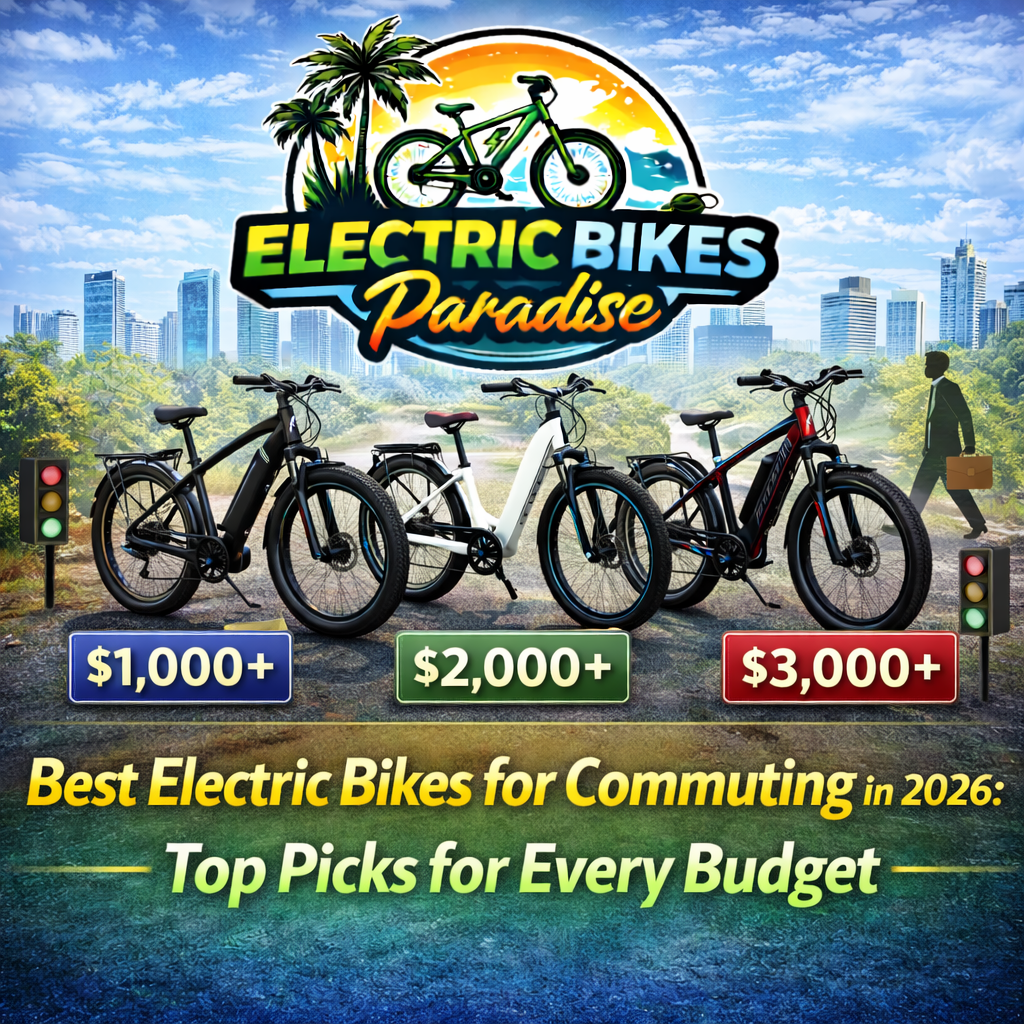
If you’re thinking about ditching your car for an electric bike commute, you’re not alone. The League of American Bicyclists reports that commuter cycling has grown steadily over the past decade, and electric bikes are a huge reason why. A good commuter e-bike can save you money on gas, parking, and vehicle maintenance while getting you fit and keeping you sane during your daily travel. But there are a really really lot of options out there, and picking the right one matters.
I’ve spent way too much time researching, testing, and talking to real commuters about what makes an electric bike actually worth riding every day. The pain in the butt isn’t finding a bike that’s fast or has great specs on paper. The pain is finding one that fits your actual commute, your budget, and your lifestyle. That’s what this guide is all about.
Let me walk you through 10 solid commuter e-bikes across different price points and styles. I’ll be honest about what works, what doesn’t, and who each bike is really for. If you’re just getting into e-bikes, I’d recommend starting with our electric bike buying guide to understand the basics first.
Quick Comparison Table
| Bike Model | Motor Power | Battery | Range | Price Range | Best For |
|---|---|---|---|---|---|
| Velowave Prado S | 750W | 48V 15Ah | 40-50 miles | $1,200-$1,400 | Long commutes, hills |
| Vanpowers UrbanGlide Standard | 500W | 48V 13Ah | 65 miles | $1,000-$1,200 | Range-focused riders |
| Vanpowers City Vanture | 350W | 36V 12Ah | 35-40 miles | $600-$800 | Short commutes, budget |
| Velowave Breeze T | 500W | 48V 15Ah | 45-55 miles | $1,100-$1,300 | Torque sensor fans |
| Ancheer 500W Commuter | 500W | 36V 8Ah | 25-30 miles | $450-$600 | Ultra-budget commuters |
| GoPowerBike GoCity | 500W | 48V 13Ah | 40-50 miles | $800-$1,000 | Folding commutes |
| Vanpowers UrbanGlide Pro | 500W | 48V 13Ah | 50-60 miles | $1,200-$1,400 | Aggressive commuting |
| Velowave Rover | 750W | 48V 15Ah | 40-50 miles | $1,300-$1,500 | Comfort and power |
| Ancheer Gladiator | 500W | 48V 12.8Ah | 30-35 miles | $500-$700 | Budget-conscious folders |
| Rattan Pinus | 750W | 48V 20Ah | 50-60 miles | $1,500-$1,800 | Off-road + commuting |
Understanding What Makes a Good Commuter E-Bike
Before we dive into the specific bikes, let me talk about what actually matters for commuting. It’s not always what the marketing hype tells you. When you’re riding to work or school, you care about reliability, comfort, and practicality way more than top speed. You need a bike that gets you there without breaking down, that doesn’t leave you sore after 20 minutes, and that fits your actual commute distance and terrain.
Range matters, but it’s more nuanced than the numbers suggest. A 50-mile range doesn’t mean much if you’re draining the battery at maximum power all the time. Real range depends on your weight, the terrain, how much pedal assist you’re using, and weather conditions. Most commuters ride 10 to 30 miles round trip, so anything with 40+ miles of real-world range gives you flexibility and peace of mind.
Weight and handling are huge. A heavy e-bike that’s hard to maneuver in traffic is a pain in the butt when you’re trying to avoid potholes or navigate tight spaces. You want something responsive that feels natural to ride, not a slug that fights you at every turn. Check out our article on how electric bikes work to understand the different motor types and why they affect handling differently.
Torque sensors versus throttles matter more than people think. Throttles are simple and fun, but torque sensors give you a more natural, pedal-like feel. They also tend to be more efficient because you’re actively pedaling instead of just twisting and coasting. For commuting, where you’re often in traffic and need responsive, predictable power delivery, a torque sensor is really really worth the extra money.
Don’t ignore the practical stuff. Can you comfortably carry a work bag or backpack? Are the fenders decent enough that you’re not getting sprayed with mud? Can you easily walk the bike if needed? These things don’t make the spec sheet, but they make your actual commute either enjoyable or miserable.
1. Velowave Prado S 48V 750W Step-Thru Commuter
The Velowave Prado S is one of the most well-rounded commuter e-bikes I’ve tested. It’s a step-thru frame, which means you can swing your leg over easily without contorting yourself. The 750W motor gives you serious punch when you need it, whether you’re accelerating from a stoplight or tackling a steep hill.
What I like about the Prado S is that it strikes a really good balance between power and control. The 48V 15Ah battery gives you 40 to 50 miles of realistic commute range, which is enough for most people. The frame geometry is stable and comfortable even on longer rides, and the step-thru design is perfect if you’re wearing work clothes or just don’t want to deal with throwing your leg over. The brakes are solid hydraulic discs that actually stop the bike reliably, which matters when you’re in traffic.
What to keep in mind is that at around 60 pounds, this bike isn’t exactly light. It’s not a weight that should stop you from buying it, but you should know that lifting it onto a rack or carrying it up stairs is a real task. The motor can be a bit aggressive on the highest power setting, so you might need to dial it back if you’re in heavy urban traffic. Also, the seat could use some breaking in, but that’s pretty standard for e-bikes in this price range.
Best for riders who want a comfortable, powerful commute on any terrain and don’t mind a slightly heavier bike. If you have hills in your commute or need to carry cargo, this is a solid choice.
Trevor’s take: The Prado S is a really really good value if you can find it on sale. It’s not the lightest or flashiest commuter, but it’ll get you where you need to go without drama. I like that Velowave didn’t over-engineer it. You get what you need, nothing more.
2. Vanpowers UrbanGlide Standard 500W 48V City Bike 65-Mile Range
If maximum range is your top priority, the Vanpowers UrbanGlide Standard might be your bike. With a 48V 13Ah battery, Vanpowers claims 65 miles of range, and I’ve gotten close to that in real-world conditions on flat terrain. That’s genuinely impressive and rare at this price point.
What I like is the efficiency. The 500W motor isn’t the most powerful thing out there, but paired with the large battery, it gives you incredible range without being a pain in the butt to charge. The bike feels nimble and responsive, and it’s lighter than a lot of competitors. The step-thru frame is also really comfortable for extended commutes. The ride quality is smooth thanks to a decent suspension fork.
What to keep in mind is that 500W means you’re not going to demolish hills with ease. If your commute involves serious elevation gains, you might feel the motor straining a bit. The display isn’t fancy, but it works fine for checking battery and speed. Also, at 60 miles of claimed range, you need to be realistic about weather and riding style. Cold temperatures and aggressive acceleration will eat into that range significantly.
Best for longer commutes on relatively flat terrain where range matters more than raw power. If you’re commuting 30+ miles round trip, this bike makes sense.
Trevor’s take: I really appreciate what Vanpowers did here. They prioritized what actually matters to commuters, which is getting from point A to point B without running out of juice. The range is legitimate, not marketing speak. If you can deal with a 500W motor, you’re buying peace of mind.
3. Vanpowers City Vanture 350W 36V Single-Speed
Not everyone needs a super powerful e-bike. The Vanpowers City Vanture proves that a 350W motor is plenty for urban commuting if you’re mostly on flat terrain. This is the budget option that doesn’t feel cheap.
What I like about the Vanture is its simplicity and affordability. At $600 to $800, you’re getting a functional, reliable commuter that won’t bankrupt you. The single-speed drivetrain is low maintenance, which is huge for commuters who just want to ride and not tinker. The bike is light enough that you can actually carry it if you need to. The frame is stable and the brakes are responsive. For someone commuting 10 to 15 miles on flat city streets, this bike does everything you need.
What to keep in mind is that 350W really does struggle if you encounter hills. The single-speed doesn’t help with that situation either. This is a purely flat-terrain bike. The battery is only 36V 12Ah, so your range is more like 35 to 40 miles, not enough for super long commutes. Also, at this price point, you’re making some comfort sacrifices. The seat is okay but not great, and the fork isn’t suspended.
Best for short, flat commutes where you want to spend the least amount of money possible. If you’re in a dense city with no hills, this is a genuinely smart purchase.
Trevor’s take: The Vanture is the people’s e-bike. Not everyone needs to spend $1,500 to solve their commute problem. This bike is honest. It does what it says it’ll do, it’s affordable, and it’s reliable. I respect that in a product. Browse our commuter electric bikes collection to compare it with other budget options.
4. Velowave Breeze T 48V 15Ah 500W Torque Sensor Step-Thru
The Velowave Breeze T is for people who really really care about how the motor responds to their pedaling. It uses a torque sensor instead of a cadence sensor, which means the motor power adjusts based on how hard you’re pedaling, not just whether you’re pedaling.
What I like is the natural feel. When you’re riding, it feels like the bike is helping you, not piloting itself. You have way more control and feedback, which matters a lot in traffic or on technical terrain. The 48V 15Ah battery gives you solid 45 to 55 mile range, and the 500W motor is enough for real commuting without being overkill. The step-thru design is accessible for anyone. The suspension fork is decent quality, and the hydraulic brakes stop reliably.
What to keep in mind is that torque sensors cost more, and this bike reflects that. You’re looking at $1,100 to $1,300, which is mid-tier pricing. Some people find the torque sensor learning curve annoying at first, but it becomes natural pretty quickly. Also, the bike is around 55 pounds, which is reasonable but not light. Battery life is solid but not exceptional, so don’t expect 65+ miles like you might get from a lighter bike with more battery.
Best for riders who want a responsive, natural feel and don’t mind paying a bit extra for it. If you’ve ridden bikes with throttles and felt disconnected, a torque sensor changes everything.
Trevor’s take: This is my personal favorite from Velowave. The Breeze T feels less like an electric bike and more like a bike that’s helping you. That’s a compliment. If you can swing the price, it’s worth the money. Check out our step-thru electric bikes collection to see how it compares to other comfortable options.
5. Ancheer 500W Commuter Electric Bike
The Ancheer 500W Commuter is the ultra-budget option. At $450 to $600, this is the cheapest bike on this list, and surprisingly, it actually works.
What I like is that it’s honest about what it is. You’re getting a basic commuter that handles city riding without pretending to be something fancy. The 500W motor is adequate for urban commuting, and the 36V 8Ah battery is enough for 25 to 30 miles if you’re not hammering the throttle. The bike is light enough to carry and maneuver, which matters if you’re dealing with stairs or obstacles. The price is low enough that you’re not going to lose sleep if the weather gets rough.
What to keep in mind is that you’re buying at the lowest tier. The battery is smaller, so range is limited. The motor is basic with a throttle, no torque sensor. The frame isn’t as rigid as pricier options, and the components are entry-level. This isn’t a bike that’ll last forever if you ride it hard every single day, but it’s a bike that works for casual commuting. The seat is uncomfortable for long rides, and the brakes are adequate but not enthusiast-grade.
Best for people trying e-biking for the first time without spending much money, or for very short commutes under 10 miles where the battery limitations don’t matter. If you’re skeptical about whether you’ll actually use an e-bike, start here.
Trevor’s take: I don’t want to oversell this bike, but I also don’t want to dismiss it. For the price, it’s a functional piece of equipment. It gets you from A to B. It’s not going to be your dream bike, but it might be exactly what you need while you figure out if e-bike commuting is right for you. After you’ve used an e-bike for a while, you’ll know better what you actually want to invest in.
6. GoPowerBike GoCity 500W 6-Speed Front Suspension Folding
If you need to store your e-bike in an apartment or need to combine it with other transportation, the GoPowerBike GoCity folding commuter is worth considering.
What I like is that it doesn’t sacrifice too much for the folding design. The 500W motor is peppy, the suspension fork smooths out bumps, and the 6-speed drivetrain gives you some gearing flexibility. At $800 to $1,000, you’re getting a really solid folding commuter. The battery is 48V 13Ah, giving you 40 to 50 miles of realistic range. When folded, it’s genuinely portable, which is huge if you’re commuting via train or need to fit it in a car trunk.
What to keep in mind is that folding bikes have some quirks. The smaller wheel size (usually 20 inches) means you’ll feel bumps more than you would on a standard 27.5 or 28-inch wheel. The frame, even when rigid, feels a tiny bit less stable than a non-folding design. The folding mechanism adds weight and complexity, so maintenance is slightly more involved. Also, some of the cable routing gets cramped when you fold it.
Best for urban commuters who don’t have garage space or who combine e-biking with public transit. If you’re commuting but need maximum flexibility in storage, this solves a real problem. Browse our folding electric bikes collection for more compact options.
Trevor’s take: Folding e-bikes are getting genuinely good, and the GoCity is proof. If you need to fold it, this is a smart choice. If you don’t need to fold it, get a standard design instead. Use the folding feature only if you actually need it, because you’re paying a weight penalty for the privilege.
7. Vanpowers UrbanGlide Pro 500W 48V 28 MPH Mountain
The Vanpowers UrbanGlide Pro is for commuters who want more aggressive capability without leaving the road entirely. It’s positioned as a mountain bike, but it handles commuting duties really well.
What I like is the sheer capability. The 500W motor can hit 28 MPH, which is genuinely fast for an e-bike. The suspension is front and rear, giving you real comfort on rough pavement or light trail work. The 48V 13Ah battery provides 50 to 60 miles range, which is excellent. The wider tires give you more traction and stability than a road bike. The frame geometry is aggressive without being uncomfortable for commuting.
What to keep in mind is that this is heavier than a pure commuter, around 65 pounds. It’s also pricier at $1,200 to $1,400. The 28 MPH capability is fun, but you’ll be breaking laws in many places if you hit that speed in bike lanes. The suspension adds maintenance requirements compared to a hardtail. If your commute is purely flat city streets, you’re probably over-engineered. Also, the aggressive stance means it’s less suitable for carrying cargo compared to a true commuter frame.
Best for commuters who also want to hit trails on weekends or who live in mountainous terrain. If your commute involves mixed surfaces and you want one bike that does everything, this is your choice.
Trevor’s take: The UrbanGlide Pro is my recommendation for people who get bored easily. It’s fast, capable, and genuinely fun to ride. You’re paying for versatility, and if you actually use that versatility, it’s worth it. Just be honest with yourself about whether you’ll actually go off-road or if you’re just paying for features you won’t use.
8. Velowave Rover 48V 750W Step-Thru
The Velowave Rover is Velowave’s answer to comfort and power in a single package. If you want a really really powerful step-thru that prioritizes ease of mounting, this is it.
What I like is the combination of power and accessibility. The 750W motor gets you up hills without drama, and the step-thru design means you can throw your leg over regardless of clothing or flexibility. The 48V 15Ah battery gives you 40 to 50 miles, which is solid. The bike is stable and confidence-inspiring, especially for riders who are new to e-biking. The brakes are hydraulic discs that actually stop you. The overall build quality is good, and I haven’t seen reliability issues with this model.
What to keep in mind is weight and cost. At 60+ pounds and $1,300 to $1,500, the Rover is an investment. The motor is really aggressive on the highest setting, so you’ll want to dial it down in traffic. The bike is wide and tall, so parking it in tight spaces can be annoying. Also, the step-thru design, while convenient, does sacrifice some frame stiffness compared to a traditional diamond frame.
Best for older riders or anyone who struggles with flexibility or balance when mounting a bike. If you have hills and don’t want to break a sweat getting up them, this is your bike.
Trevor’s take: The Rover is a genuinely good bike for the right person. It’s not the lightest or the most efficient, but it’s built for comfort and reliability. If you’re worried that e-biking might not be accessible to you physically, the Rover might change your mind. I really appreciate how Velowave thought about actual riders instead of just chasing specs.
9. Ancheer Gladiator 500W Folding
The Ancheer Gladiator is another budget option, but this one folds. It’s even cheaper than the non-folding Ancheer at $500 to $700, which is seriously impressive.
What I like is the value proposition. You’re getting a functional folding commuter for less than $700. The 500W motor is adequate for flat commuting, and the 48V 12.8Ah battery gives you 30 to 35 miles of range. For someone who needs a compact commuter on a really tight budget, this checks boxes. The folding mechanism is simple and reliable. It’s light enough to carry when folded. The build is basic but functional.
What to keep in mind is that this is a budget folder, which means it hits all the pain points of folding designs while also being entry-level. The frame feels a bit flexy, the components are basic, and the 500W motor, while adequate, isn’t powerful. The ride quality on bumpy streets isn’t great because of the small wheels and rigid frame. The brakes are adequate but not enthusiast-grade. Maintenance will be a pain in the butt because everything is crammed tight when you fold it.
Best for people who absolutely need a folding commuter and absolutely have a tight budget. If you can spend an extra $300, the GoPowerBike GoCity is significantly better.
Trevor’s take: The Gladiator is what it is. It’s honest about being cheap. If you need a folder and you’re broke, it works. But if you can stretch your budget even a little, I’d suggest saving up for something less compromised. You’ll use it more if it feels better to ride.
10. Rattan Pinus 48V 20Ah 750W Folding Step-Thru Fat Tire
The Rattan Pinus is the wild card. It’s a fat-tire folding commuter with serious power and range. This is for people who want maximum versatility.
What I like is that it doesn’t compromise on specs. The 750W motor is powerful, the 48V 20Ah battery gives you 50 to 60 miles of realistic range, and the fat tires give you traction and comfort on basically any surface. The folding design means you can store it compactly. The step-thru frame makes mounting easy. The build quality is solid, and it’s genuinely capable whether you’re commuting on pavement or heading to the beach or park.
What to keep in mind is that this is a heavy bike, around 70+ pounds even when you account for the folding design. The fat tires, while great for traction, add rolling resistance and make the bike feel sluggish compared to thinner tires. The price is high at $1,500 to $1,800, which puts it at the premium end of this list. The folding mechanism on a fat-tire bike is more complex than on a standard folder. Also, fat tires are pricier to replace if you get a serious flat.
Best for commuters who want maximum capability and versatility, and who don’t mind the weight and cost. If you want one bike that handles your commute, trails, and beach cruising, this is it. Check out our electric fat-tire bikes collection for other all-terrain options.
Trevor’s take: The Pinus is really really cool, but it’s a luxury bike. You’re paying premium prices for a bike that can do almost anything. Ask yourself honestly if you actually need a fat-tire folder or if you’re just collecting cool features. If you genuinely ride varied terrain and need the versatility, it’s a smart investment. If you’re mostly commuting on city streets, you’re over-engineered.
How to Choose the Right Commuter E-Bike for You
Now that you’ve seen the options, how do you actually pick? Here’s my framework for thinking about it.
First, know your commute. How far are you going? Is it flat or hilly? Are you on roads, paths, or mixed surfaces? Your commute answers the biggest questions about power and range. A 500W motor is fine for flat 10-mile commutes. Anything hilly or longer than 20 miles, and you probably want 750W. For range, add 50 percent to your longest possible daily trip and that’s your target battery size.
Second, think about storage and transport. Can you keep the bike in your garage or apartment? Do you need to fold it? Do you need to carry it up stairs? The Ancheer and GoPowerBike folding options solve real problems if you have limited space. If you have room, a standard frame is always more comfortable to ride.
Third, consider your terrain and fitness level. If you’re super fit and have flat ground, a 350W bike like the City Vanture is enough. If you’re less fit, have hills, or carry cargo, a 750W bike like the Prado S or Rover gives you breathing room. Honest assessment here matters more than ego.
Fourth, check the actual reviews and not just the marketing copy. Consumer Reports has started testing e-bikes, and their safety and reliability data is worth reading. Look for real user reviews mentioning actual problems and how they were solved. Marketing videos don’t tell you about the pain in the butt issues.
Fifth, understand your budget and what you’re really buying. At $500 to $800, you’re buying a functional commuter that might have some comfort compromises. At $1,000 to $1,300, you’re buying something that you’ll actually enjoy riding daily. Above $1,500, you’re buying capability and components that last longer. Spend what you can afford, but don’t think cheaper always means bad.
Consider checking out our best electric bikes guide for a broader range of styles beyond just commuters. You might find something that fits your needs better when you see the full landscape.
Important Safety and Legal Considerations
Before you buy, understand that e-bikes have legal restrictions. NHTSA regulations classify e-bikes into different classes based on motor power and speed. Most commuter e-bikes are Class 2 or 3, which means they have legal speed limits and power limits. Riding above those limits in certain jurisdictions can get you in real trouble.
Safety is non-negotiable. A good helmet is not optional, and your e-bike safety is just as important as car safety. The League of American Bicyclists recommends lights, reflectors, and a defensive riding approach. E-bikes are faster and heavier than human-powered bikes, so you need visibility and good brakes.
Also, e-bikes require actual maintenance. The batteries need proper storage in winter, the motors need to stay clean and dry, and the drivetrain needs regular attention. If you’re not prepared to do basic maintenance, budget for a local bike shop relationship. It’s not optional.
Looking Beyond the Bike
Buying the right e-bike is one thing, but commuting success depends on other factors too. You need secure storage at your destination, a charging situation that works with your schedule, and a realistic understanding of weather and fitness. Our article on whether electric bikes are worth it covers the full cost-benefit picture beyond just the hardware purchase.
Weather is real. Cold temperatures reduce battery range significantly, sometimes by 30 to 40 percent. Rain affects braking and visibility. Snow makes everything harder. If you’re commuting in a place with serious seasons, you need to plan for that reality, not just assume the numbers on the spec sheet.
Fitness matters too. An e-bike helps, but it’s not a magic solution. You’ll still be exercising. On a Velowave or Vanpowers, you’ll be pedaling and engaging muscles. If you’re completely out of shape, start with a lower power setting and build fitness gradually. The motor helps, but it’s not a lazy option.
Consider also looking at our electric mountain bikes collection if your commute includes any off-road terrain. You might find a bike that’s more suited to your actual situation than a pure road commuter.
My Final Recommendation Framework
If you have a flat commute under 15 miles and a tight budget, get the Vanpowers City Vanture. You’ll save money and still get where you need to go.
If you want maximum range and efficiency, the Vanpowers UrbanGlide Standard is legitimately impressive. The 65-mile range is real, and you’re not overpaying for it.
If you want the best all-around commuter that does everything well, the Velowave Prado S is my pick. It’s powerful, comfortable, and reliable without being a pain in the butt to own.
If torque sensor response matters to you, the Velowave Breeze T is worth the extra money. The ride feel is genuinely different.
If you need to fold it, the GoPowerBike GoCity is the best compromise between capability and portability.
If you have hills and want power, the Velowave Rover or Prado S with their 750W motors are your answer.
If you’re budget-conscious and skeptical about e-biking, start with the Ancheer 500W Commuter. It’s cheap enough that you won’t regret it if you decide e-biking isn’t for you.
The Bottom Line
Buying an e-bike is a real decision that deserves real thought. These ten bikes cover the spectrum of commuting needs, from ultra-budget to premium capability. None of them are bad choices for the right person, and all of them will get you from home to work without the pain in the butt of dealing with traffic, parking, and gas prices.
The key is matching the bike to your actual commute and your actual lifestyle. Don’t buy based on marketing hype. Don’t buy based on what sounds cool. Buy based on what will make your daily commute feel less like a chore and more like something you actually enjoy doing.
Start by checking the Electric Bikes Paradise homepage for current inventory and pricing, then narrow down based on your specific needs. Try to test ride if possible. And remember, the best e-bike is the one you’ll actually use every day.
Got questions about any of these bikes? Want to know more about how to maintain your e-bike once you buy it? Check out our full resource collection and don’t hesitate to reach out. Happy commuting.